What Is Afternoon Tea? A Friendly Guide to the British Tradition
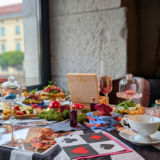
What is afternoon tea? A light meal of tea, sandwiches, scones and cakes, eaten somewhere between lunch and dinner. That’s the dictionary answer, anyway. Ask anyone who’s been to a good one and they’ll tell you it’s really about the two hours you spend at the table, and the fact that nobody is in any hurry for you to leave.
We run afternoon teas in Krakow, and most of our guests come from the UK. Some of them grew up with it. Plenty of others are booking their first one and want to know what they’ve let themselves in for. If that’s you, read on. It’s a lot less formal than its reputation.
Where afternoon tea came from
Britain was drinking tea for almost two hundred years before anyone thought to make a meal of it. Tea became fashionable at court in the 1660s, after Charles II married Catherine of Braganza, a Portuguese princess who arrived with a chest of it in her luggage and drank it every day. Where the queen led, the aristocracy followed.
Afternoon tea as we know it is usually credited to Anna, Duchess of Bedford, in the 1840s. Fashionable people dined late in those days, often not until eight, and by mid-afternoon the Duchess, so the story goes, complained of a “sinking feeling”. So she started having tea, bread and butter and a bit of cake sent up to her room around four. Then she started inviting friends. Within a few years the whole of polite society was at it.
To be fair to everyone else, people had been sneaking afternoon snacks long before the Duchess. Her contribution was turning it into an occasion with a set time and a menu, which is the bit that stuck.
What do you actually eat?
Traditionally, three things, and they usually arrive on a tiered stand.
The bottom tier is sandwiches. Little ones, crusts off, cut into fingers or triangles so you can manage them in a couple of bites. Cucumber is the classic. Egg and cress, smoked salmon, and ham and mustard are never far behind.
The middle tier is scones, ideally still warm, with clotted cream and jam. For a lot of people this is the main event.
Then the top tier, which is where the kitchen shows off: small cakes, tarts, éclairs, a slice of Victoria sponge, maybe a macaron or two.
The tea itself is usually black. English breakfast, Earl Grey, Assam and Darjeeling are the old favourites, taken with milk, or with lemon if you prefer. These days you’ll almost always be offered green and herbal teas as well, and very often a glass of fizz.
And yes, at most traditional afternoon teas you can ask for more sandwiches. Hotels in particular will usually top them up without blinking.
Afternoon tea etiquette (the bits that matter)
There’s a whole industry built on afternoon tea etiquette, and a fair amount of it is nonsense. What’s left is mostly ordinary good manners. A few things are worth knowing, though.
Start at the bottom of the stand and work up: sandwiches, then scones, then cakes. Savoury before sweet, same as dinner.
Break your scone in half with your fingers instead of slicing it with a knife. Then add the cream and jam as you go, a bit at a time. Building one enormous loaded scone is frowned on, although honestly it’s hard to blame anyone.
On the great question of jam or cream first: in Devon, cream goes on first. In Cornwall, it’s jam. People from those two counties will argue about it for hours. Everyone else can please themselves.
With a modern cup, pour the tea first and add milk after, so you can see how strong it is. (The milk-first habit is usually explained as a way of stopping cheap porcelain from cracking.)
Stir gently, back and forth rather than round in circles, so the spoon doesn’t clatter. And please don’t stick your little finger out. It’s a myth, and etiquette experts hate it.
Most of all, don’t rush. Nobody serves afternoon tea expecting you to be done in forty minutes.
Afternoon tea vs high tea vs cream tea
This one trips up a lot of people, partly because “high tea” sounds like the posh version. It isn’t. High tea was a working family’s meal: something hot and filling with bread, cake and tea, eaten at the table around six o’clock after a day’s work. The “high” just refers to the dining table. Afternoon tea, eaten earlier in low armchairs, was sometimes called “low tea” for the same reason.
A cream tea is the cut-down version: a pot of tea with scones, clotted cream and jam, and nothing else. You’ll find one in every café in Devon and Cornwall.
| What you get | When | Originally for | |
|---|---|---|---|
| Afternoon tea | Tea, sandwiches, scones, cakes | Mid-afternoon, traditionally around 4pm | High society |
| High tea | A hearty hot meal with tea, bread and cake | Early evening, around 5–7pm | Working families |
| Cream tea | Tea with scones, clotted cream and jam | Any time in the afternoon | Everyone |
Plenty of places now call their afternoon tea “high tea” anyway, so if you’re booking, check what’s on the menu instead of trusting the name.
What time is afternoon tea?
The old answer is four o’clock. In real life, most places serve afternoon tea any time from about midday to early evening. If you book an early afternoon slot, you’ll probably skip lunch and want only a snack later. Book at four and it can easily stand in for dinner.
What should you wear?
Wear whatever you’d wear to a nice lunch. A handful of grand London hotels still ask men for a jacket, but they’re the exception. Most afternoon teas are smart casual at most, and at themed ones, dressing up is half the fun.
How afternoon tea has changed
The format has hardly changed in nearly two hundred years. Everything around it has. Prosecco has pretty much become part of the furniture. Vegetarian menus are normal. Children get their own afternoon teas, with smaller sandwiches and more icing. And themed afternoon teas, built around a story or a particular setting, have turned it into something closer to an outing than a meal.
None of that has changed why people book it, though. Afternoon tea is still one of the few plans that gets a mixed group of people sitting down together for a couple of hours with nothing else to do. That’s why it works so well for birthdays, hen parties, baby showers and the catch-up you’ve been promising your friends for a year.
Afternoon tea in Poland
Poland has its own tea habits, and they’re quite different. Poles drink a lot of tea, herbata, all through the day, but it often comes in a glass instead of a china cup, with lemon and sugar instead of milk. When it’s cold, someone will usually add raspberry syrup or honey. Tea with milk does exist (it even has its own name, bawarka), but you’d be surprised how few people actually drink it.
What Poland never really had was the tiered stand and the finger sandwiches. That’s changing, especially in Krakow, where afternoon tea has caught on with visitors and locals alike. It suits the city. After a morning on your feet around the Old Town and Wawel, a couple of hours sitting down with tea, a glass of Prosecco and something sweet is about as good as it gets.
If you’re coming to Krakow and fancy trying one, have a look at our afternoon tea experiences. They each have their own theme and setting, and they’re all a short walk from the Main Market Square.
A few tips for your first afternoon tea
Book ahead if you can, especially for a weekend or a big group. Weekend afternoons go first.
Tell the venue about dietary needs when you book, not when you sit down. Most of the food is prepared in advance.
Go easy on lunch. Three tiers don’t look like much until you’re halfway up the stand.
Pick your company well. Afternoon tea is best with people you actually want to talk to, which is why it’s such a good fit for a catch-up with friends, a birthday or a hen party that wants one calm afternoon in the middle of the weekend.
And if you’ve got questions about booking one with us, our FAQ page should have the answer.